
🧪 Avogadro’s Number Calculator 🔬
Convert between moles, particles, and atoms instantly with our free chemistry tool
Table of Contents
🔢 Avogadro’s Number Calculator
Use our calculator to quickly convert between moles, particles, atoms, and molecules using Avogadro’s constant (6.022 × 10²³).
Moles to Particles
Particles to Moles
Mass to Moles
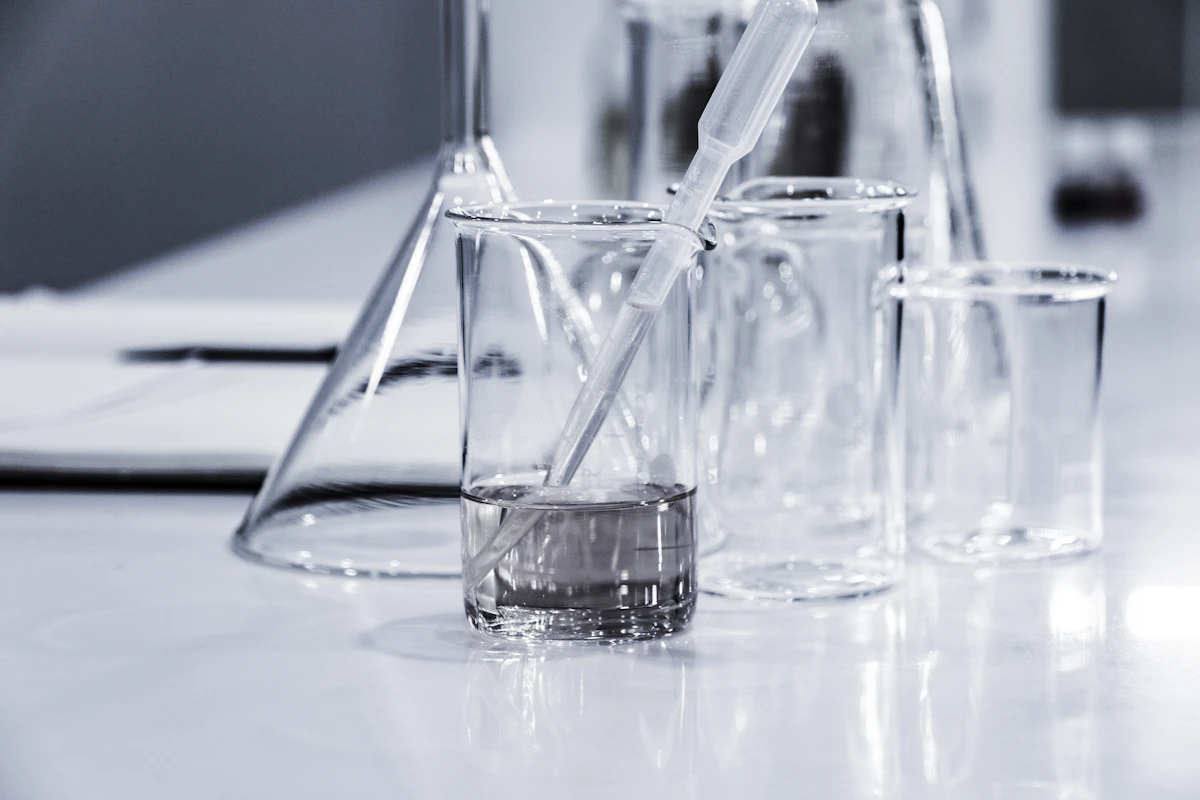
⚛️ What is Avogadro’s Number?
Avogadro’s number, named after scientist Amedeo Avogadro, is a fundamental constant in chemistry that represents the number of constituent particles (usually atoms or molecules) in one mole of a substance. The currently accepted value is approximately 6.02214076 × 10²³ mol⁻¹.
This Avogadro’s number calculator makes it easy to perform conversions between moles and particles, which is essential for stoichiometric calculations in chemistry. Whether you’re working with atoms, molecules, ions, or other particles, our tool simplifies the process.
Why is Avogadro’s Number Important?
Avogadro’s number provides a bridge between the microscopic world of atoms and molecules and the macroscopic world we can measure in the laboratory. It allows chemists to count particles by weighing them, making chemical calculations practical and achievable.
According to the International Union of Pure and Applied Chemistry (IUPAC), Avogadro’s number is defined as exactly 6.02214076 × 10²³, making it a fixed value in the revised SI system since 2019.
📜 History of Avogadro’s Number
The concept of Avogadro’s number has a rich history dating back to the early 19th century. Amedeo Avogadro, an Italian scientist, first proposed in 1811 that equal volumes of gases at the same temperature and pressure contain the same number of particles. This hypothesis, now known as Avogadro’s Law, laid the foundation for the concept of the mole.
However, the actual numerical value of Avogadro’s number wasn’t determined until much later. In 1865, Johann Josef Loschmidt made the first estimate of the size of molecules, which led to an approximate value for what we now call Avogadro’s number. Over the years, various methods have been used to determine this constant with increasing precision, including X-ray crystallography, Brownian motion analysis, and modern methods using silicon spheres.
In 2019, as part of the redefinition of SI units, Avogadro’s number was given an exact value, eliminating the measurement uncertainty that had previously been associated with it.
📝 How to Use This Avogadro’s Number Calculator
Our calculator offers three main functions to help with your chemistry calculations:
1. Moles to Particles Conversion
Enter the amount in moles, and the calculator will multiply by Avogadro’s number to give you the number of particles (atoms, molecules, etc.). This conversion is essential when you need to determine the actual number of atoms or molecules in a given amount of substance.
2. Particles to Moles Conversion
Enter the number of particles, and the calculator will divide by Avogadro’s number to give you the amount in moles. This is useful when you know the number of particles and need to convert to moles for further calculations.
3. Mass to Moles Conversion
Enter the mass of your substance and its molar mass, and the calculator will convert the mass to moles using the formula: moles = mass / molar mass. This is one of the most common calculations in chemistry, as it allows you to relate the mass of a substance to the number of particles it contains.
All calculations are performed instantly, and you can easily copy the results for your lab reports or homework assignments.
🔬 Practical Applications of Avogadro’s Number
Understanding and using Avogadro’s number is crucial in many areas of chemistry and related fields:
Chemical Reactions
Balancing chemical equations and predicting reaction outcomes requires converting between grams, moles, and numbers of particles. For example, when determining the limiting reactant in a chemical reaction, you need to convert masses to moles to compare the amounts of reactants on a per-particle basis.
Solution Preparation
Preparing solutions with specific molar concentrations involves calculations using Avogadro’s number. For instance, to prepare a 1 M solution of sodium chloride (NaCl), you need to dissolve one mole of NaCl (58.44 grams) in enough water to make one liter of solution. This one mole contains 6.022 × 10²³ NaCl formula units.
Stoichiometry
Determining theoretical yields, limiting reagents, and reaction efficiencies all depend on mole-particle conversions. For example, in the reaction between hydrogen and oxygen to form water, you need to know that 2 moles of hydrogen react with 1 mole of oxygen to produce 2 moles of water, which corresponds to specific numbers of molecules of each substance.
Materials Science
Calculating the number of atoms in nanomaterials or the density of crystalline structures uses Avogadro’s constant. For instance, when working with nanoparticles, scientists often need to know how many atoms are present in a particle of a certain size to understand its properties.
Biochemistry
In biochemistry, Avogadro’s number is used to calculate concentrations of biomolecules, such as enzymes, DNA, and proteins. For example, when preparing a solution of a specific enzyme for an experiment, you might need to know how many molecules are present in a given mass of the enzyme.
Our Avogadro’s number calculator simplifies these complex calculations, making chemistry more accessible to students and professionals alike.
📊 Real-World Case Studies
Case Study 1: Pharmaceutical Manufacturing
In pharmaceutical manufacturing, precise measurements are critical for drug efficacy and safety. A pharmaceutical company was developing a new medication that required an exact dosage of 25 mg of the active compound. By using Avogadro’s number, they were able to determine that this dosage contained approximately 4.2 × 10¹⁹ molecules of the active compound, allowing for precise quality control and consistency across batches.
Case Study 2: Environmental Science
Environmental scientists studying air pollution needed to quantify the number of carbon dioxide molecules in a cubic meter of air. By measuring the mass of CO₂ and using Avogadro’s number, they determined that a cubic meter of air with 400 ppm CO₂ contains approximately 1.0 × 10²² CO₂ molecules. This information was crucial for modeling climate change and developing strategies to reduce greenhouse gas emissions.
Case Study 3: Nanotechnology
Researchers in nanotechnology were developing gold nanoparticles for cancer treatment. They needed to know how many gold atoms were present in nanoparticles of different sizes. Using Avogadro’s number and the density of gold, they calculated that a 10 nm gold nanoparticle contains approximately 24,000 gold atoms, while a 50 nm nanoparticle contains about 3 million gold atoms. This information was essential for understanding the nanoparticles’ properties and optimizing their effectiveness.
❓ Frequently Asked Questions

👩🔬 About the Author
Dr. Sarah Mitchell is a renowned chemist with over 15 years of experience in both academic research and industrial applications. She holds a Ph.D. in Physical Chemistry from MIT and has published numerous papers on molecular dynamics and quantum chemistry.
Dr. Mitchell has worked with leading pharmaceutical companies and research institutions, applying her expertise in molecular calculations to develop new drugs and materials. She is passionate about making complex chemistry concepts accessible to students and professionals alike.
As an educator, Dr. Mitchell has taught chemistry at various universities and has developed several online courses and tools to help students master challenging concepts. Her work has been recognized with multiple awards, including the prestigious National Chemistry Education Award.

